
How to Play Tower Rush
Choose a stake, build a floor, then decide whether to cash out or risk another step. A successful build raises the cumulative return. A collapse ends the active round.

Tower Rush Rules
The core rules fit into six lines:
- Select a stake.
- Press Build.
- A successful floor changes the cumulative multiplier or odds.
- Choose Cash Out or press Build again.
- Cash Out settles at the displayed value.
- A collapse ends the active run.
Bonus floors can alter that normal sequence. They are random and cannot be selected on demand.
The player controls the stake and the decision to continue. The next floor result remains random.
Tower Rush Controls
Stake Selector
The stake is set before a round begins. Available values depend on the casino, currency and game configuration.
A larger stake does not improve RTP or make a floor more likely to succeed. It only scales the amount at risk and the possible return.
Build Button
Build starts the next floor attempt.
After a successful floor, the tower grows and the active return changes. Pressing Build again exposes the existing value to another random result.
The animation may tempt players to hunt for timing cues. There is no verified tapping rhythm, crane position or sound pattern that improves the next result.
Cash Out Button
Cash Out ends the current round voluntarily.
Cash Out settles the round at the displayed cumulative value, subject to any operator payout cap or rounding rule. Once the next build attempt begins, the previous cash-out opportunity is gone.
Current Multiplier or Potential Return
Tower Rush accumulates the values attached to successful floors. The interface may describe them as odds, a multiplier or a potential return.
Four numbers are easy to confuse:
- the value attached to one floor;
- the cumulative round value;
- the final amount after stake multiplication;
- the casino’s maximum-win cap.
They are not interchangeable.
Help, History and Fairness Information
The game menu can contain RTP, stake limits, maximum payout, round history, feature explanations and fairness information.
For the final RTP, limits and settlement rules, the information panel inside the casino version takes priority.
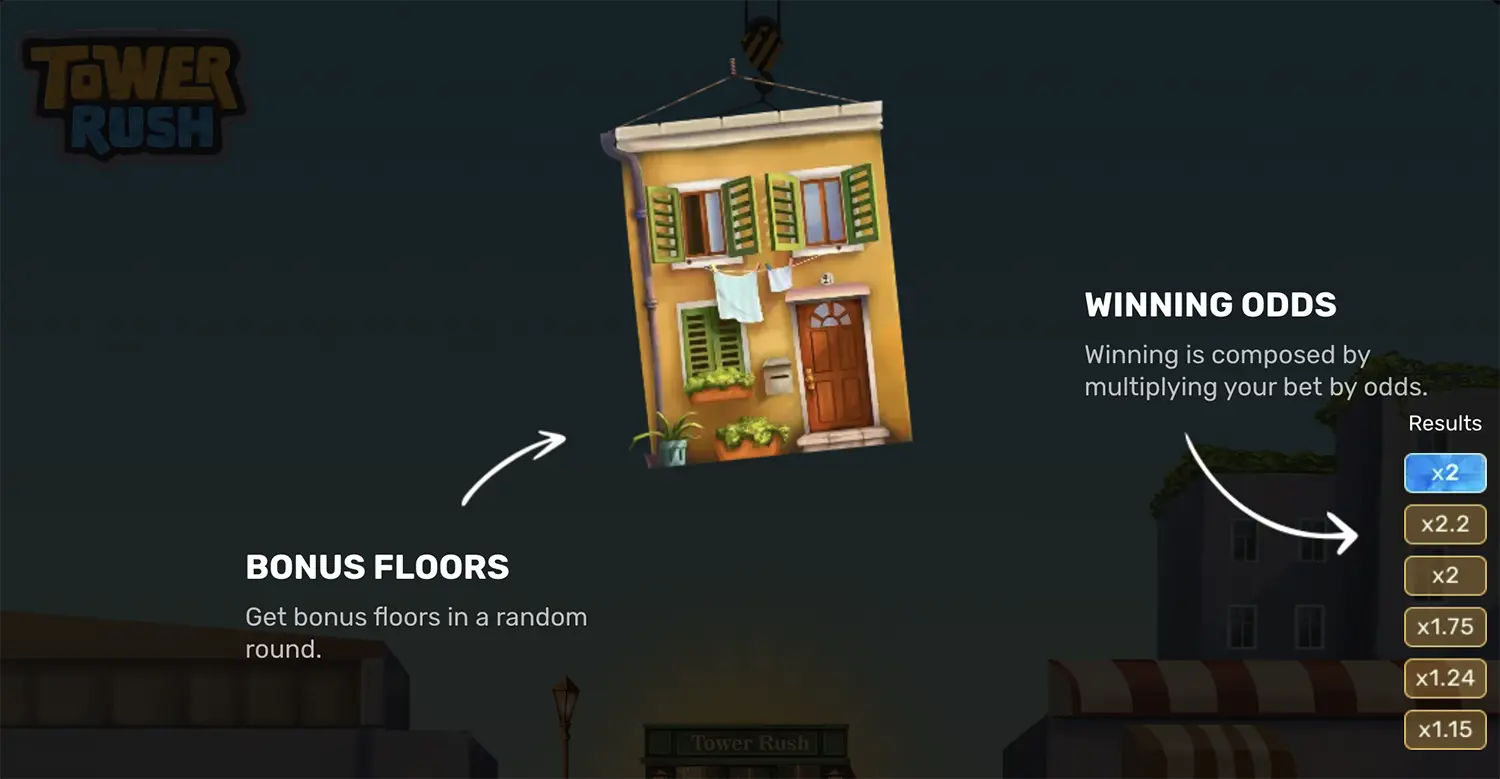
How a Round Develops
- 01
1. Set the Stake
Keep the amount inside a fixed session budget. Demo denominations may differ because the balance is virtual.
- 02
2. Press Build
The first floor attempt begins. A successful placement adds a floor and updates the cumulative value. A failed attempt ends the round. If Frozen Floor has already locked an amount, that protected value remains payable.
- 03
3. Read the Updated Value
The number on screen is a potential settlement, not money already moved into the casino balance.
- 04
4. Choose Build or Cash Out
Cash Out accepts the current amount.
Build keeps the round alive and exposes it to another result.
A lower target can create more frequent completed cash-outs with smaller values. Chasing taller towers creates wider swings and more rounds ending without a settlement. Neither approach changes the published RTP.
- 05
5. Complete or Restart the Round
A cash-out adds the settled result to the balance. A collapse ends the active sequence. If Frozen Floor triggered earlier, the locked amount remains payable.
The next round begins independently. Previous collapses do not make a long tower due.
Worked Round Example
The numbers below are illustrative, not a Tower Rush paytable.
| Stage | Displayed value | Decision | Outcome |
|---|---|---|---|
| Stake selected | 1.00 | Build | First floor attempt begins |
| Floor 1 succeeds | 1.18x | Build | Round continues |
| Floor 2 succeeds | 1.46x | Cash Out | The round settles at 1.46 |
| Alternative | 1.46x | Build | Next floor may succeed or collapse |
If the player continued and the next attempt collapsed, the round would end without the 1.46 cash-out. A previously locked Frozen Floor amount would still be paid.
That lost opportunity is the risk already built into the continue-or-stop decision.
What Happens When the Tower Collapses?
A normal collapse ends the build sequence and loses the active stake.
The animation can make a result feel close, as though a floor only missed by a pixel. Near misses do not carry mathematical credit. The round is settled by the RNG result, not by the drama of the fall.
Frozen Floor changes the settlement by preserving a locked amount if it triggered earlier.
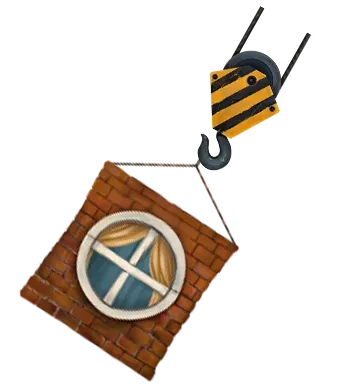
How Tower Rush Multipliers Work
Each successful floor contributes a value to the active round. Galaxsys describes the values as compounding across the tower.
A simplified example:
Stake × Floor 1 value × Floor 2 value × Floor 3 value = potential return
If a 1.00 stake moves through illustrative floor values of 1.10, 1.15 and 1.20:
1.00 × 1.10 × 1.15 × 1.20 = 1.518
The game may display 1.52 after rounding. A casino cap can limit the payable amount even if the tower continues.
RTP, floor values and payout limits are covered in the Tower Rush RTP guide.

Bonus Floors During a Round
The three feature floors alter the normal Build-or-Cash-Out loop:
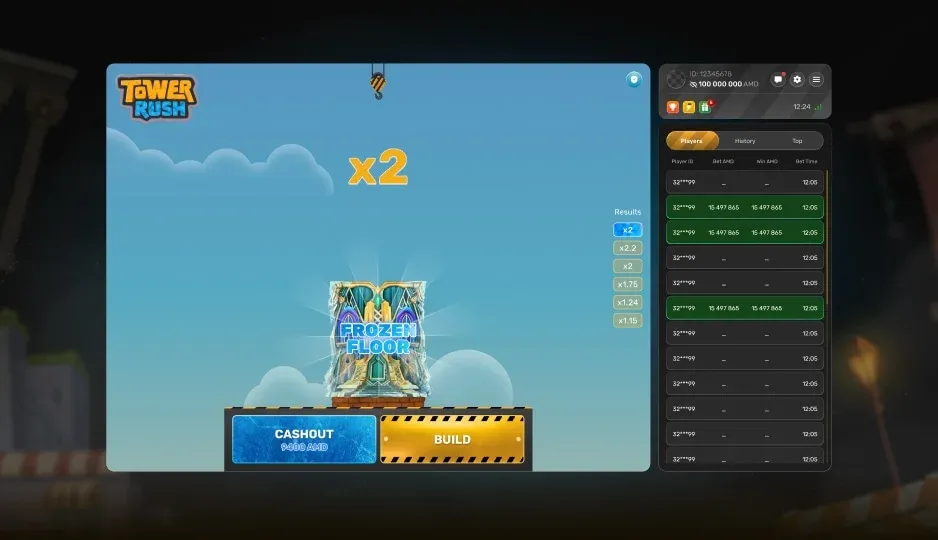
Frozen Floor
locks the current win. A later collapse leaves the protected amount intact.
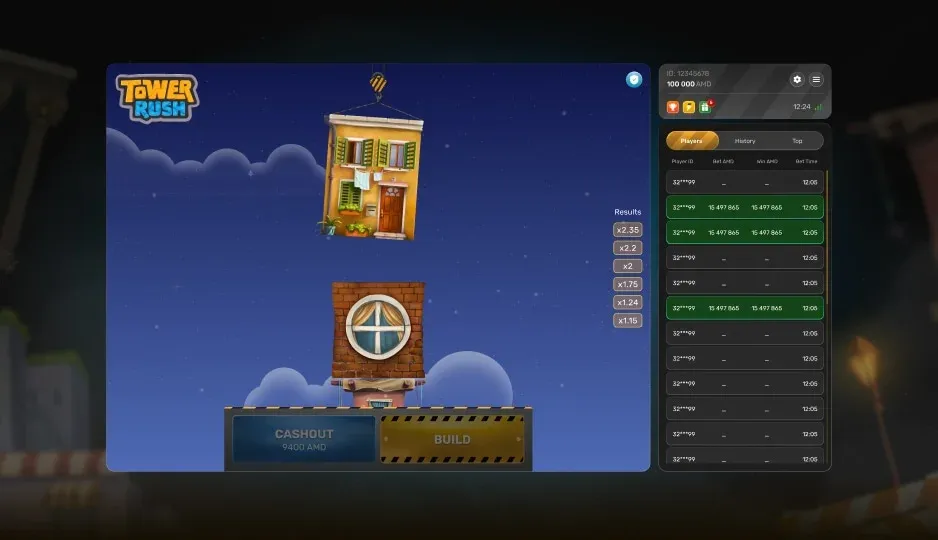
Temple Floor
opens a 10-section wheel with multiplier awards and a freezing segment.
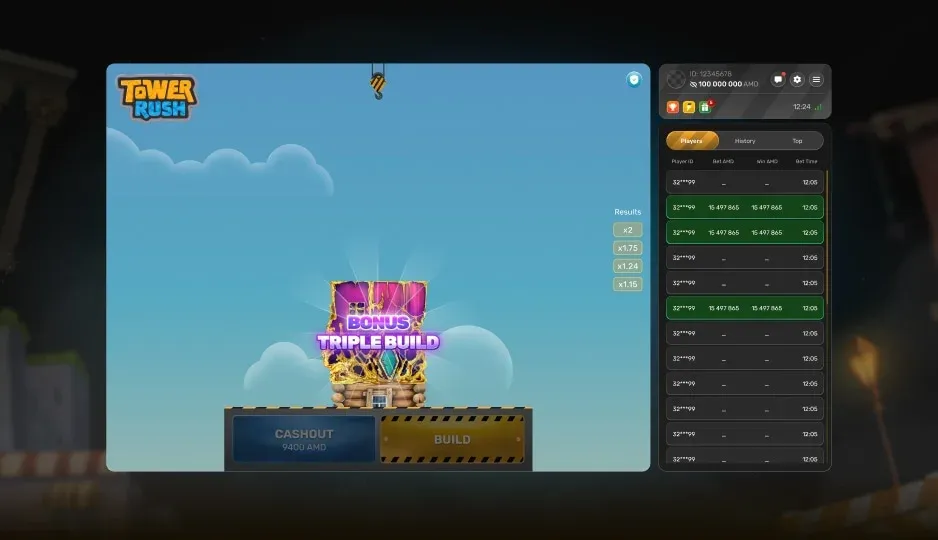
Triple Build
adds three floors automatically without collapse risk during the sequence.
The round can continue after a feature, subject to the active game rules and any maximum payout cap.
Is Tower Rush Skill or Luck?
Tower Rush contains a decision. That does not make the next result skill-based.
The player controls:
- stake size;
- whether to cash out;
- how many rounds to play;
- session budget;
- account limits.
The player does not control:
- the next floor result;
- bonus-floor timing;
- RNG;
- the casino’s RTP configuration;
- payout caps.
A disciplined cash-out rule may reduce impulsive decisions. It cannot turn a game with a house edge into a positive-expectation system.
Practical Ways to Control Exposure
Keep the Stake Fixed
A fixed amount prevents loss-chasing from quietly multiplying risk.
Decide the Exit Rule Before the Round
A predefined floor count or displayed value removes some heat from the live decision. It changes behaviour, not probability.
Limit Rounds or Session Time
Tower Rush restarts quickly. A timer or round limit makes the session length easier to track.
Use Casino Account Controls
Deposit limits, loss limits, wager limits, cooling-off periods and self-exclusion are more reliable than improvising during a fast session.
Systems That Do Not Beat the Game
| System or claim | Why it fails |
|---|---|
| Martingale | Doubling after a loss does not alter the next result and rapidly increases stake size |
| Hot and cold towers | Recent tower heights do not predict the next independent round |
| Waiting for a bonus cycle | Bonus floors have no public schedule a player can track |
| Predictor apps or signals | A third-party tool cannot guarantee the provider’s next RNG result |
| Mod APKs | A local app cannot force a casino server to validate a fake payout |
| Copying streamer targets | Another player’s cash-out choice changes their risk, not your probability |
Common Beginner Mistakes
- treating the current potential return as already won;
- raising stakes after a collapse;
- pressing Build without noticing the active value;
- assuming timing controls the crane;
- expecting a bonus because none appeared recently;
- confusing RTP with win frequency;
- ignoring a maximum payout cap;
- using demo results as a forecast;
- installing an unrelated Tower Rush app;
- playing too fast to notice total stake volume.
Demo mode is the cleanest place to learn the controls. The Tower Rush Demo Guide explains what free play can and cannot teach.
How to Play Tower Rush FAQ
How do I start a round?
Choose a stake and press Build.
What does Build do?
It begins the next floor attempt and exposes the active round to another random result.
When can I cash out?
Cash Out becomes available at decision points after successful progress.
How is the payout calculated?
The stake is multiplied by the current cumulative value, then any rounding or maximum-payout rule applies.
What happens after a collapse?
The round ends. Frozen Floor can preserve a locked amount if it triggered earlier.
Are rounds independent?
Yes. Previous results do not make the next tower more likely to succeed or collapse.
Does pressing at the right time help?
There is no verified timing method that controls the RNG result.
Is Tower Rush a game of skill?
The cash-out decision involves judgement. The next floor outcome remains random.
Can a strategy guarantee profit?
No. Staking and cash-out systems change volatility and behaviour, not the house edge.
What do the bonus floors do?
Frozen Floor protects the current win, Temple Floor opens a wheel, and Triple Build adds three automatic floors.
Is a Tower Rush predictor real?
No legitimate predictor can guarantee future RNG results.
Where can I find the RTP?
The active casino version provides its RTP in the game information panel.
Play Tower Rush
Practise the controls with virtual credits in the Tower Rush demo, or continue to a casino carrying the Galaxsys game.
